





Beyond Awareness: Rethinking How We Support Autistic People's Mental Health
April 17, 2026 - Smart TMS


April is Autism Awareness and increasingly, Autism Acceptance Month. At Smart TMS, we're marking it by looking honestly at where mental health research and practice are falling short for autistic people, and where we believe the future lies.
Why Autism Awareness Still Matters
Autism is a neurodevelopmental condition characterised by differences in social communication, sensory processing, and patterns of thinking and behaviour. It is not a disease, nor a deficiency but it does exist in a world largely not designed for autistic minds. In the UK, around 1 in 100 people are autistic (Prevalence Rate of Autism – Autism Europe, n.d.), though this figure is likely an underestimate, particularly among women, girls, and people of colour, who are historically underdiagnosed.
Awareness matters because invisibility has consequences. When autism goes unrecognised, by clinicians, employers, schools, or families, autistic people are left to navigate systems and expectations that were never built with them in mind. The resulting friction is not trivial. Autistic people are disproportionately affected by mental health difficulties: estimates suggest that up to 80% of autistic people will experience a mental health condition at some point in their lives (Curnow et al 2023). Anxiety, depression, burnout, and PTSD are especially prevalent, often compounded by the chronic stress of masking, suppressing autistic traits to appear neurotypical, and a persistent experience of not quite fitting in.
This is not incidental. It is a predictable outcome of a society that still treats difference as deficit. Awareness is the first step toward changing that.
Accommodations: Small Adjustments, Significant Impact
One of the most meaningful things any environment, clinical, educational, or professional, can offer an autistic person is genuine accommodation. Accommodations are adjustments made to reduce the barriers created by environments, systems, or expectations that were designed with neurotypical people in mind. They are not special treatment; they are equity.
What accommodations look like in practice varies enormously, because autism is a spectrum and autistic experiences are deeply individual. Common examples include providing written as well as verbal instructions, offering quieter or lower-stimulation spaces, allowing flexibility around eye contact, giving advance notice of changes to routine, permitting the use of stimming (self-stimulatory behaviour) as a self-regulation tool, and allowing additional processing time in conversations or assessments. In clinical settings specifically, accommodations might mean longer or more flexible appointment slots, clearer and more literal communication, sensory-aware waiting rooms, or offering remote and asynchronous options where possible.
What matters most is that accommodations are developed collaboratively — with the autistic person themselves, not simply prescribed from the outside. An accommodation that works for one person may not work for another. Moving away from a one-size-fits-all model and toward genuinely individualised support is both more ethical and, the evidence suggests, more effective.
The Problem with Current “Treatments”: Neurodiverse-blind vs Neuroaffirming Approaches
Mental health treatment for autistic people has a complicated history, and, in many services, a complicated present. Historically, many interventions were oriented not toward the wellbeing of autistic individuals, but toward making them appear more neurotypical. Applied Behaviour Analysis (ABA), for instance, has been widely used but is also widely criticised by autistic advocates and researchers for its focus on suppressing autistic traits rather than addressing underlying distress or building genuine self-determination (Leaf et al 2022).
Even well-intentioned mainstream therapies can fall short when they are not adapted for autistic ways of thinking and communicating (Riches et al 2023). Standard CBT, for example, relies heavily on identifying and challenging cognitive distortions — but for many autistic people, the distress is not a distortion; it is a rational response to genuinely difficult circumstances. Delivering unmodified neurotypical frameworks to autistic client's risks being ineffective at best and invalidating at worst.
Neuroaffirming care takes a different stance. It starts from the position that autism is a natural variation in human neurology, not a pathology to be corrected. It prioritises the autistic person's own goals, values their sensory and cognitive differences, and focuses on reducing suffering rather than reducing autistic traits. In practice, this might mean adapting therapeutic language to be more concrete and direct, explicitly naming social rules that neurotypical therapists take for granted, incorporating special interests into treatment, or focusing on building capacity for self-advocacy rather than social conformity. It also means taking seriously the very real environmental and social stressors like stigma, masking or sensory overwhelm, that drive so much autistic mental health difficulty, rather than locating the problem solely within the individual.
The shift toward neuroaffirming approaches is not just an ethical one, it is a clinical one. Autistic people are more likely to engage with and benefit from support that respects who they are.
Looking to the Future: TMS, EEG and the Science of Personalised Intervention
At Smart TMS, our work sits at the intersection of neuroscience and mental health and increasingly, that means grappling with how neurotechnology can be made to work for neurodivergent people, not just applied to them.
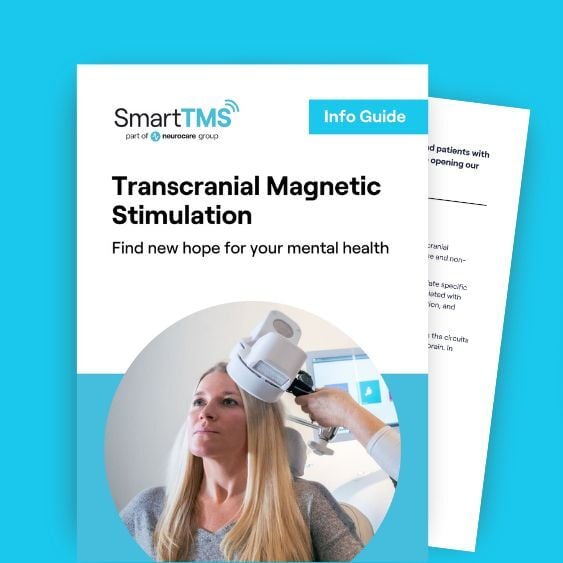
Transcranial Magnetic Stimulation (TMS) is a non-invasive brain stimulation technique that uses magnetic pulses to modulate neural activity in targeted brain regions. It is already NICE-approved for treatment-resistant depression, and a growing body of research is exploring its potential across a range of conditions including the anxiety, depression, and sensory processing difficulties that many autistic people experience.
Our own research has begun examining TMS in neurodivergent populations, including autistic individuals, with a specific focus on understanding how neurological differences may influence treatment response. This is important work, because the existing TMS literature has been built almost entirely on neurotypical samples. Applying those protocols without adjustment to neurodivergent brains risks being both less effective and less safe. We are committed to building an evidence base that reflects the populations we serve.
This is where EEG (electroencephalography) becomes particularly exciting. EEG measures the brain's electrical activity in real time and with high temporal resolution, giving us a live window into neural dynamics that imaging techniques cannot provide. In the context of TMS, EEG can tell us a great deal: how the brain is responding to stimulation, whether a given protocol is having its intended effect, and critically where an individual's brain activity sits at baseline. Autistic brains show well-documented differences in oscillatory patterns, connectivity, and cortical excitability. EEG-informed TMS, where stimulation parameters are tailored based on an individual's own EEG profile rather than population-level norms, represents a significant step toward truly personalised neuromodulation.
Neurofeedback extends this further, allowing individuals to learn to regulate their own brain activity in real time using EEG feedback. Rather than receiving stimulation passively, a person engaged in neurofeedback is an active participant in shaping their neural patterns, training their brain toward states associated with greater regulation, focus, or calm. For autistic individuals who experience sensory overwhelm, emotional dysregulation, or chronic anxiety, neurofeedback offers a non-pharmacological, non-invasive route to building greater capacity for self-regulation. Early evidence is promising, though larger and more rigorous trials are needed and crucially, those trials need to be designed with neuroaffirming principles and autistic input from the outset.
The future we are working toward is one where the question is not "can we apply this technology to autistic people?" but "how do we develop this technology in genuine partnership with autistic people, so that it serves their wellbeing on their own terms?"
Conclusion
Autism Awareness Month is an opportunity not just to acknowledge autistic people's existence, but to examine honestly whether our systems, services, and science are truly serving them. The mental health burden carried by autistic people is real and significant and it is not inevitable. It is, in large part, the product of environments and interventions that have failed to meet autistic people where they are.
Meaningful change requires action at every level: broader social acceptance, genuinely accessible and neuroaffirming mental health services, and a research agenda that keeps autistic people's lives and voices at its centre. At Smart TMS, we believe that advanced neurotechnology, TMS, EEG, neurofeedback, and the personalised approaches that combine them, has a real role to play in that future. But only if it is developed thoughtfully, inclusively, and with a commitment to what autistic people themselves tell us they need.
If you'd like to learn more about our research into TMS and neurodivergent populations, or our neuroaffirming approach to mental health support, get in touch with carmen.plevin@smarttms.co.uk
Written by Carmen, Smart TMS Bristol practitioner.
References
-
Prevalence rate of autism – Autism Europe. (n.d.). https://www.autismeurope.org/about-autism/prevalence-rate-of-autism/
-
Curnow, E., Rutherford, M., Maciver, D., Johnston, L., Prior, S., Boilson, M., Shah, P. J., Jenkins, N., & Tamsin Meff. (2023). Mental health in autistic adults: A rapid review of prevalence of psychiatric disorders and umbrella review of the effectiveness of interventions within a neurodiversity informed perspective. PLOS ONE, 18(7), e0288275–e0288275. https://doi.org/10.1371/journal.pone.0288275
-
Leaf, J. B., Cihon, J. H., Leaf, R., McEachin, J., Liu, N., Russell, N., Unumb, L., Shapiro, S., & Khosrowshahi, D. (2022). Concerns about ABA-Based Intervention: an Evaluation and Recommendations. Journal of Autism and Developmental Disorders, 52(6). https://doi.org/10.1007/s10803-021-05137-y
-
Riches, S., Hammond, N., Bianco, M., Fialho, C., & Acland, J. (2023). Adapting cognitive behaviour therapy for adults with autism: A lived experience-led consultation with specialist psychological therapists. The Cognitive Behaviour Therapist, 16(13). https://doi.org/10.1017/s1754470x23000053