



Contact us Contact us
0345 222 5678 0345 222 5678

TMS treatment for Post-Stroke Depression

Transcranial Magnetic Stimulation treatment for depression after stroke

TMS for depression treatment
Post-stroke depression can take away much of what makes life meaningful — energy, motivation, independence, and hope for recovery.
TMS treatment can help restore these things by supporting the healing and re-balancing of the brain after stroke.

Talk to us about how TMS can help.

 

depression

What causes post-stroke depression?

Post-stroke depression (PSD) affects around 33% of stroke survivors. Unlike typical depressive illness, PSD is not simply an emotional reaction to disability.

A stroke can directly disrupt the brain networks that regulate mood, motivation, and cognitive function. Damage or reduced activity within the mood-regulating circuits — particularly the dorsolateral prefrontal cortex (DLPFC) — can lead to:

  • Low mood and hopelessness
  • Loss of drive and motivation
  • Cognitive slowing
  • Emotional withdrawal
  • Difficulty engaging in rehabilitation

Traditional treatments, such as antidepressant medication or talking therapies, can help, but many stroke survivors do not achieve full relief — often due to medication side effects, complex prescriptions, or incomplete response.

This is where TMS therapy offers a promising, non-drug alternative.

What is post-stroke depression?

Post-stroke depression is a common, medical condition that can significantly affect emotional wellbeing and physical rehabilitation.

Symptoms may include:

  • Persistent sadness or hopelessness
  • Loss of pleasure or interest
  • Reduced motivation and energy
  • Anxiety or irritability
  • Changes in appetite
  • Sleep problems
  • Difficulty concentrating
  • Low self-esteem
  • Suicidal thoughts in severe cases

PSD can appear weeks, months, or even years after the stroke — but it is treatable, and recovery is possible.

Post-stroke depression treatment options

Standard treatment often includes:

  • Antidepressant medication
  • Talking therapies, such as CBT
  • Lifestyle and rehabilitation strategies
  • In severe cases, Electroconvulsive Therapy (ECT)

While these treatments can be helpful, many stroke survivors struggle with:

  • Insufficient symptom relief
  • Side effects from medications
  • Difficulty managing multiple prescriptions
  • Limited access to psychological therapy

TMS depression treatment

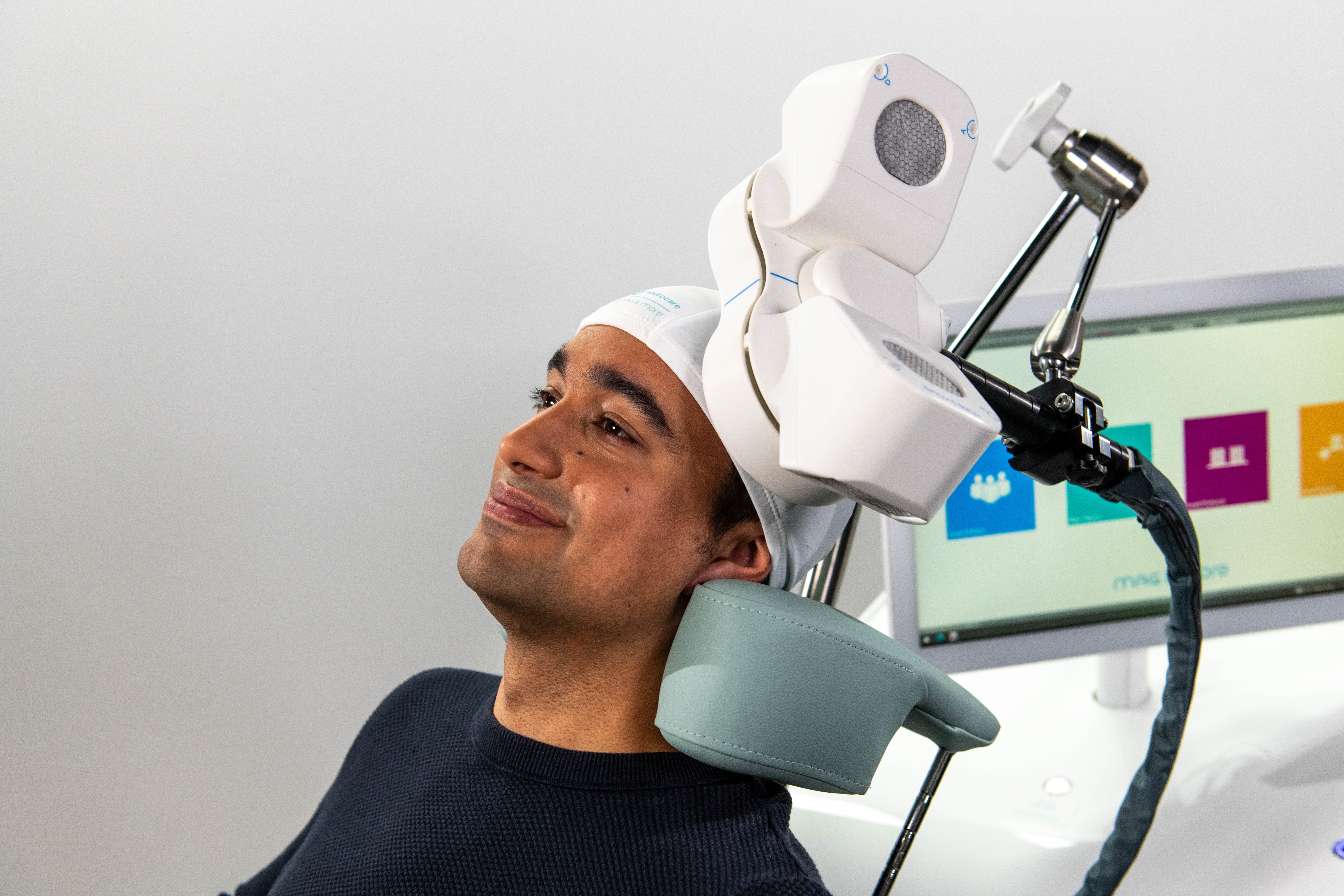
TMS offers a non-invasive, well-tolerated treatment option that directly targets the brain circuits affected by stroke.


How does TMS work for post-stroke depression?

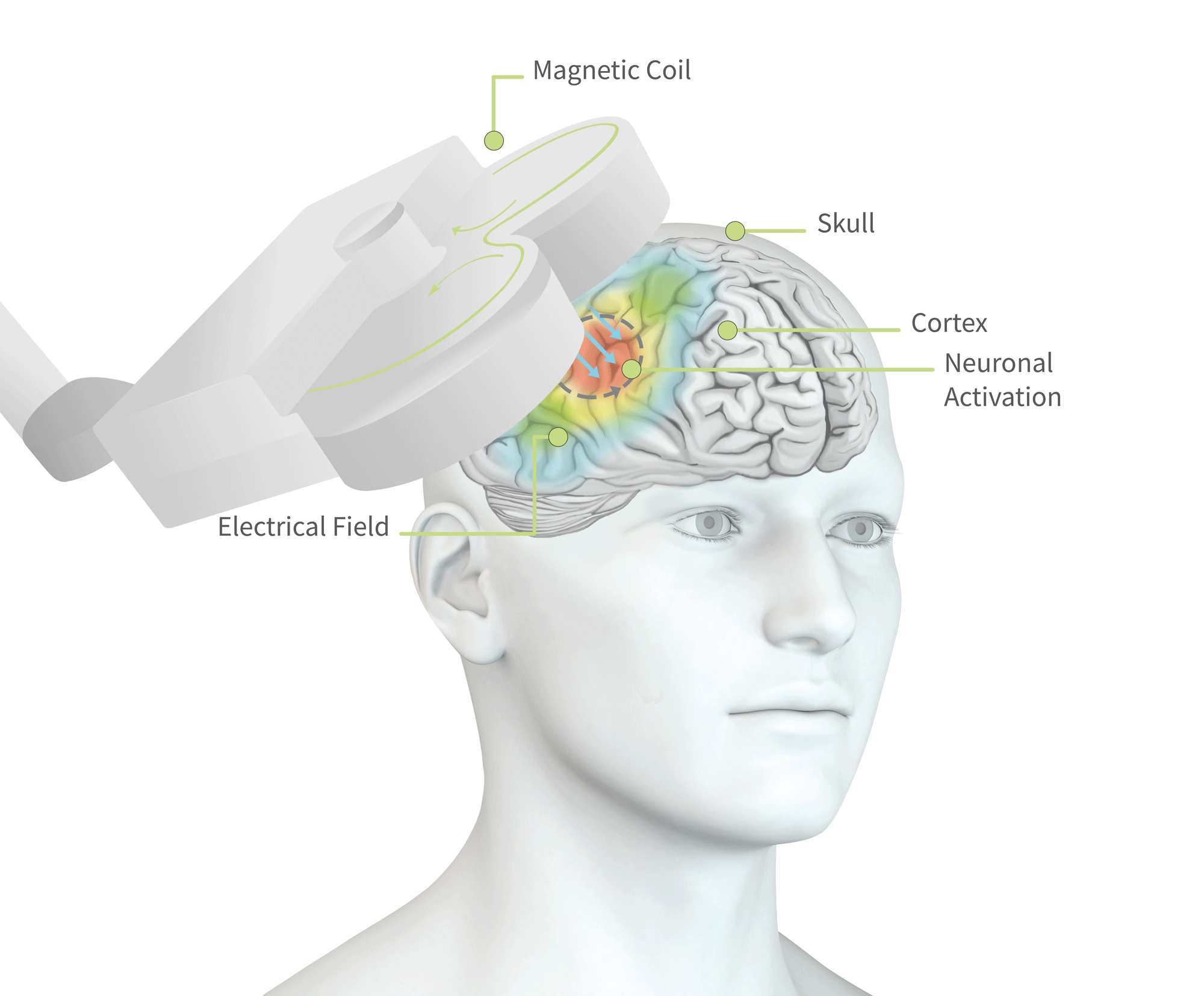
TMS uses repeated magnetic pulses to stimulate the dorsolateral prefrontal cortex (DLPFC) — an area crucial for:

  • Emotional processing
  • Motivation
  • Social engagement
  • Cognitive function

After a stroke, this region may become underactive or disrupted.

TMS helps by:

  • Re-activating and balancing mood circuits
  • Increasing neurotransmitters (serotonin, dopamine, norepinephrine)
  • Improving cerebral blood flow
  • Boosting BDNF (a key molecule for neural repair)
  • Supporting the rebuilding of damaged pathways

Unlike medication, which affects the whole body, TMS targets the affected brain networks directly, helping the brain recover function.

A typical course involves 30 sessions over 3–6 weeks, with each session lasting around 30 minutes.


Smart TMS results

For patients with depression, Smart TMS use the most up-to-date techniques based on the latest scientific research. In our most recent data audit of the patients we treated for major depression:

  • 49% went into remission.
  • 56% had a 33% reduction in the severity of their symptoms.


Extensive
 research has shown Transcranial Magnetic Stimulation to be a safe and effective way to tackle depression.
transcranial magnetic stimulation depression


TMS compared to other treatments
This table is scrollable
Treatment TMS ECT Antidepressants
Description Non-invasive magnetic fields Electrical current to induce seizure Oral Medication
NICE approved
Non-invasive
Outpatient treatment
Ongoing recovery
Side-effects Mild headaches
Mild fatigue
1 in 50,000 risk of seizures
Confusion
Disorientation
Headaches
Intense sleepiness
Jaw ache
Anesthetic complications
Memory loss
Muscle aches
Nausea
Anxiety
Diarrhoea
Dizziness
Fatigue
Headache
Increased appetite
Migraine
Nausea
Nervousness
Sleep problems
Sexual dysfunction
Weight gain

TMS treatment costs

Assessment price

After completing your online questionnaires and confirming that TMS is right for you, you'll have a video chat with one of our expert clinicians. This session is an opportunity for you to discuss your condition in detail, ask any questions you may have, and receive personalised advice on how TMS treatment can benefit you.

The cost of this assessment is £350.

Depression and anxiety treatment prices

At Smart TMS, we recognise that a large percentage of our patients suffer from depression and anxiety alongside one another. For this reason, we treat these two conditions together within the same session.

TMS treatment for depression and anxiety is split into two courses. After 15 sessions, the results of the treatment are very apparent for most patients.

  London Other locations
Initial course
(15 sessions)
£3,750 £3,300
Second course
(15 sessions)
£3,750 £3,300
Total costs
(including assessment)
£7,850 £6,950


What our patients say...
"Everyone I dealt with was extremely friendly, helpful and supportive. Having suffered from treatment resistant depression, I feel I can now face so much of the major stressors in my life. This has been such a successful treatment for me and if you compare it to a recurring prescription of therapy, it works out so much more affordable without any side effects."
Maggie - 26,London
"Friendly knowledgeable staff and excellent service. The clinic in Bristol was clean and easy enough to find from the train station. I wasn't sure what to expect of the treatment but once I was used to it, it became quite relaxing and I am feeling much better than before I started. I'm looking forward to going back each month to have my top up sessions."
Adam - 38,Bristol
"The practitioner who carries out my treatment was very professional and made the whole experience stress free."
Louise - 43,Manchester

Continuous care

rtms treatment for depression

Dr Neal and his team understand the need to help our patients stay well beyond the end of their TMS treatment. Using research and our own experience, we have designed aftercare packages to provide ongoing care with a planned programme of regular top-up treatments.

Have you had TMS treatment for depression at another clinic? Smart TMS can offer you maintenance therapy, too.

Smart TMS Brochure

Get access to our free brochure & make an informed choice about TMS treatment.

Click to download Click to download
Brochure Image

Contact our team about TMS treatment

UK Flag Smart TMS UK

Monday - Friday, 9am - 5pm
Email info@smarttms.co.uk

UK Flag Smart TMS Ireland

Monday - Friday, 9am - 5pm
Email info@smarttms.ie

Let's see if TMS is right for you with a quick screening check

Let's see if TMS is right for you with a quick screening check

Copyright © Smart rTMS Ltd. 2025 - Company number 09921994