





Why Depression in Women Doesn't Always Look Like Depression: A Clinician's Take
February 26, 2026 - Smart TMS


And How TMS May Play a Role in Treatment
Prevalence of Depression in Women
According to the World Health Organisation (2025), women are approximately 1.5 times more likely to develop major depressive disorder (MDD) across their lifetime than men. This higher prevalence of depression in women has been consistently replicated across large epidemiological studies in both high- and low-income countries (Kuehner, 2017). Depression can significantly impair functioning across work, home and education settings (World Health Organisation, 2025). Despite its impact on physical and mental health and overall wellbeing, only approximately one third of individuals with depression receive professional help in high-income countries, with treatment rates reducing further in low-income countries (World Health Organisation, 2025).
Given this disparity, improving access to effective mental health treatment for women remains a global priority.
Women are particularly at risk for MDD at several stages across the lifespan (Kuehner, 2017). While rates of depression are relatively low before puberty, the onset of puberty is associated with a significant increase in depression in girls and young women (Stumper & Alloy, 2023). A second high-risk window is the postpartum period (Wang et al., 2021). The global prevalence of postpartum depression (PPD) is estimated at 17%, with variation depending on marital status, educational level, life stress, income and other psychosocial factors (Wang et al., 2021).
A third period of increased vulnerability is the transition to menopause (perimenopause) (Badawy et al., 2024). During perimenopause, women are at significantly greater risk of developing depression compared to premenopausal women (Badawy et al., 2024).
These recurring periods of increased risk highlight the need for accessible, evidence-based mental health treatment for women, particularly treatments that address the biological drivers underlying this vulnerability.
Mechanisms Underpinning Depression in Women
To understand the higher prevalence of depression in women, it is essential to explore the underlying biological mechanisms. Research has examined psychological, environmental and genetic contributors; however, this blog focuses on biological mechanisms. Two key systems emerge: neuroplasticity and neurotransmitter regulation (Labaka et al., 2018).
Neuroplasticity
Sex-specific differences in neuroplasticity may partially explain increased vulnerability. Under stress, females demonstrate more pronounced dendritic remodelling compared to males (Eid et al., 2019). These structural changes may alter neural circuits involved in emotional regulation, increasing susceptibility to depression.
Additionally, sex differences have been observed in brain-derived neurotrophic factor (BDNF), a molecule central to neuroplasticity (Eid et al., 2019). Females show greater fluctuations in BDNF levels, which may create periods of heightened neuroplastic vulnerability (Eid et al., 2019). These fluctuations may be particularly relevant during hormonal transition periods such as puberty, postpartum, and perimenopause.
Neurotransmitters and Hormonal Influence
Oestrogen plays a crucial role in regulating neurotransmitter systems, particularly serotonin, dopamine and norepinephrine (Badawy et al., 2024). Fluctuations or reductions in oestrogen — such as those occurring postpartum or during perimenopause — can affect neurotransmitter availability and function, increasing vulnerability to depressive symptoms (Badawy et al., 2024).
These biological patterns may also contribute to the higher co-occurrence of anxiety and depression in women, highlighting the importance of treatments that target both mood and anxiety symptoms.
Taken together, differences in neuroplasticity and neurotransmitter regulation represent two key biological mechanisms that effective TMS treatment for depression should aim to address.
TMS for Women with Depression
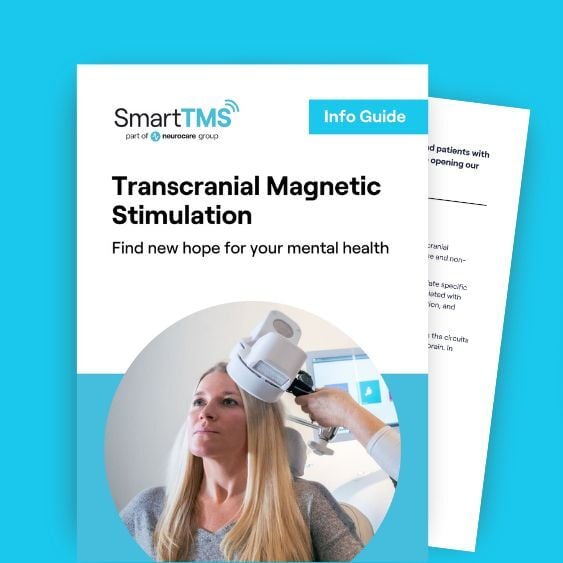
Repetitive transcranial magnetic stimulation (rTMS) is a non-invasive, NICE-approved neuromodulation treatment for depression (Dalhuisen et al., 2022). As an evidence-based TMS for depression intervention, it works by delivering targeted magnetic pulses to specific brain regions involved in mood regulation.
When considering the biological mechanisms discussed above, TMS for women represents a particularly well-suited treatment approach. Unlike medication, TMS directly stimulates cortical regions implicated in depression, promoting functional and structural brain changes.
A core benefit of TMS treatment for women with depression is its ability to enhance neuroplasticity (Fitzsimmons et al., 2024). Research demonstrates that rTMS induces measurable changes across key brain networks associated with mood regulation (Fitzsimmons et al., 2024). One proposed mechanism involves increases in BDNF expression, which promotes synaptic plasticity (Fitzsimmons et al., 2024).
Increased neuroplasticity is associated with improved neurotransmitter binding and release — particularly dopamine, serotonin and glutamate — all of which are linked to improved clinical outcomes (Fitzsimmons et al., 2024).
Importantly, TMS for anxiety and depression may be particularly relevant for women, given the high comorbidity between these conditions. By modulating neural circuits implicated in both mood and anxiety regulation, TMS offers a broader, circuit-based approach to treatment.
As a non-invasive treatment that does not require hospitalisation and is generally well tolerated, TMS for women provides an appealing option for those who may not have responded to medication or who prefer a drug-free alternative.
Conclusion
Women experience higher rates of depression across multiple life stages, influenced in part by biological differences in neuroplasticity and neurotransmitter regulation. These mechanisms provide a strong rationale for treatments that directly target brain circuitry.
As a NICE-approved, evidence-based intervention, TMS for depression offers a promising and scientifically grounded mental health treatment for women. By enhancing neuroplasticity and modulating neurotransmitter systems, TMS for women with depression may address the biological vulnerabilities contributing to increased risk — supporting meaningful and sustained clinical improvement.
Written by Lavina, our Smart TMS Edinburgh practitioner
References
Badawy, Y., Spector, A., Li, Z., & Desai, R. (2024). The risk of depression in the menopausal stages: A systematic review and meta-analysis. Journal of Affective Disorders, 357, 126–133. https://doi.org/10.1016/j.jad.2024.04.041
Dalhuisen, I., van Bronswijk, S., Bors, J., Smit, F., Spijker, J., Tendolkar, I., Ruhé, H. G., & van Eijndhoven, P. (2022). The association between sample and treatment characteristics and the efficacy of repetitive transcranial magnetic stimulation in depression: A meta-analysis and meta-regression of sham-controlled trials. Neuroscience & Biobehavioral Reviews, 141, 104848. https://doi.org/10.1016/j.neubiorev.2022.104848
Eid, R. S., Gobinath, A. R., & Galea, L. A. M. (2019). Sex differences in depression: Insights from clinical and preclinical studies. Progress in Neurobiology, Sex and Gender Differences in the Brain, 176, 86–102. https://doi.org/10.1016/j.pneurobio.2019.01.006
Fitzsimmons, S. M. D. D., Oostra, E., Postma, T. S., van der Werf, Y. D., & van den Heuvel, O. A. (2024). Repetitive Transcranial Magnetic Stimulation–Induced Neuroplasticity and the Treatment of Psychiatric Disorders: State of the Evidence and Future Opportunities. Biological Psychiatry, Transcranial Magnetic Stimulation, 95(6), 592–600. https://doi.org/10.1016/j.biopsych.2023.11.016
Kuehner, C. (2017). Why is depression more common among women than among men? The Lancet Psychiatry, 4(2), 146–158. https://doi.org/10.1016/S2215-0366(16)30263-2
Labaka, A., Goñi-Balentziaga, O., Lebeña, A., & Pérez-Tejada, J. (2018). Biological Sex Differences in Depression: A Systematic Review. Biological Research For Nursing, 20(4), 383–392. https://doi.org/10.1177/1099800418776082
Stumper, A., & Alloy, L. B. (2023). Associations Between Pubertal Stage and Depression: A Systematic Review of the Literature. Child Psychiatry & Human Development, 54(2), 312–339. https://doi.org/10.1007/s10578-021-01244-0
Wang, Z., Liu, J., Shuai, H., Cai, Z., Fu, X., Liu, Y., Xiao, X., Zhang, W., Krabbendam, E., Liu, S., Liu, Z., Li, Z., & Yang, B. X. (2021). Mapping global prevalence of depression among postpartum women. Translational Psychiatry, 11(1), 543. https://doi.org/10.1038/s41398-021-01663-6
World Health Organisation. (2025). Depressive disorder (depression). Retrieved February 12, 2026, from https://www.who.int/news-room/fact-sheets/detail/depression