





Why PTSD Can Affect Memory and Concentration
May 6, 2026 - Smart TMS


Post-traumatic stress disorder (PTSD) is widely recognised for its emotional and psychological impact, yet its effects on memory and concentration are often less understood. For many people, the cognitive symptoms of trauma can be just as disruptive as the emotional ones—affecting work performance, relationships, and the ability to manage everyday tasks. Feeling forgetful, easily distracted, or mentally overwhelmed is a common experience, and it reflects the way trauma changes how the brain functions.
Understanding PTSD and Its Different Presentations
PTSD can develop after experiencing or witnessing a traumatic event, such as an accident, assault, medical trauma, or prolonged periods of stress. While it is often associated with flashbacks and heightened anxiety, the condition is more complex and can present differently from person to person. Some individuals experience intense emotional distress, while others notice more subtle but persistent difficulties with thinking, memory, and focus.
These differences can depend on the nature of the trauma, how long it lasted, and individual factors such as resilience, support systems, and overall mental health. This variation is one reason why symptoms like PTSD and memory loss or difficulty concentrating are not always immediately recognised as part of the condition.
How Trauma Affects Memory
One of the key ways PTSD affects cognition is through its impact on memory processing. Traumatic experiences are not always stored in the brain in a structured or coherent way. Instead, they may be fragmented or encoded with heightened emotional intensity.
This can make certain memories feel intrusive and vivid, while at the same time making it harder to recall everyday information such as conversations, instructions, or recent events. Many people with PTSD describe a sense of “mental fog,” where their ability to retain and retrieve information feels noticeably reduced. These experiences are commonly linked to PTSD and memory loss and can significantly affect daily functioning.
Why Concentration Becomes Difficult
Concentration can also be significantly affected. PTSD often involves intrusive thoughts or memories that arise unexpectedly, drawing attention away from the present moment. This can make it difficult to stay focused on tasks, follow conversations, or complete activities that require sustained attention.
Even when someone is trying to concentrate, their mind may feel pulled elsewhere, creating frustration and a sense of reduced productivity. This reflects common experiences of PTSD and concentration problems, where attention is repeatedly disrupted by internal distress.
Hypervigilance and Mental Overload
Hypervigilance is another important factor. People with PTSD may feel constantly on alert, as though they need to be ready for potential danger. While this response is rooted in the brain’s natural survival mechanisms, it can place a continuous demand on cognitive resources.
When the brain is prioritising scanning the environment for threats, there is less capacity available for memory, attention, and problem-solving. Over time, this can lead to mental fatigue and difficulty managing even routine tasks—often described as brain fog in PTSD.
Changes in Brain Function
There is also growing evidence that PTSD is associated with changes in brain function, particularly in areas involved in memory and executive functioning, such as the hippocampus and prefrontal cortex. These regions play a critical role in organising information, regulating attention, and supporting decision-making.
When they are affected by trauma, it can alter how information is processed and retrieved, contributing to the cognitive symptoms many people experience.
How These Symptoms Show Up in Daily Life
In daily life, these cognitive changes can show up in subtle but impactful ways. Someone might forget appointments or struggle to keep track of responsibilities, lose focus during meetings, or find it difficult to absorb written information. Tasks that were once straightforward may take longer to complete, and there may be a sense of reduced mental clarity or confidence.
For some, these experiences can lead to additional stress or self-doubt, particularly if they are not recognised as part of a broader response to trauma.
Can Cognitive Symptoms of PTSD Improve?
It is important to recognise that these cognitive symptoms are not a reflection of ability or intelligence. They are a natural consequence of how the brain adapts to overwhelming experiences. PTSD exists on a spectrum, and the way it affects memory and concentration will vary between individuals.
Encouragingly, these cognitive effects can improve with the right support. Addressing the underlying trauma often reduces the mental load on the brain, allowing cognitive functions such as attention and memory to recover. A combination of therapeutic approaches, lifestyle adjustments, and emerging treatments can play a role in this process.
How TMS Can Help PTSD and Cognitive Function
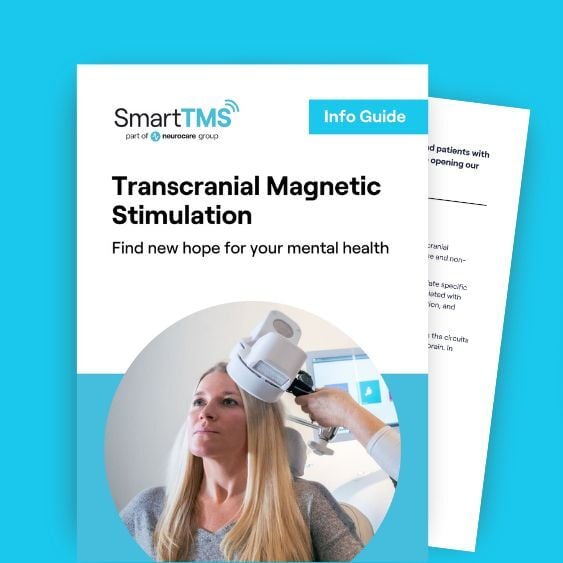
Transcranial Magnetic Stimulation (TMS) is gaining recognition as an effective, non-invasive treatment for trauma-related conditions. TMS for PTSD works by using targeted magnetic pulses to stimulate areas of the brain involved in mood regulation and cognitive functioning.
By helping to rebalance activity in these regions, TMS may reduce symptoms such as anxiety and intrusive thoughts, which in turn can improve concentration, mental clarity, and overall cognitive performance.
TMS is also widely used as a treatment for depression. Many people exploring TMS for depression report improvements not only in mood but also in focus, motivation, and cognitive clarity. As a non-invasive depression treatment, it provides an alternative for individuals who have not responded to medication or prefer a medication-free approach. It is increasingly recognised as a PTSD treatment without medication, offering a different pathway to recovery.
About Smart TMS
At Smart TMS, we specialise in delivering personalised, clinically led TMS treatment across the UK and Ireland. Our approach is focused not only on reducing core symptoms but also on addressing the wider impact that conditions like PTSD can have on everyday life—including challenges with memory and concentration.
Whether you are exploring TMS therapy for PTSD, TMS for depression, or support for symptoms such as brain fog and poor focus, our team is here to guide you through your options.
References
- Scott, J. C. et al. (2015). A quantitative meta-analysis of neurocognitive functioning in PTSD.
- Bisby, J. A., Burgess, N., & Brewin, C. R. (2020). Memory and PTSD: A cognitive neuroscience perspective.
- Brewin, C. R. (2003). Posttraumatic Stress Disorder: Malady or Myth?
- Ehlers, A. & Clark, D. M. (2000). A cognitive model of PTSD.
- Vasterling, J. J. et al. (2002). Neuropsychological outcomes of PTSD.
- Morey, R. A. et al. (2011). Emotional working memory in PTSD.
- Mathew, A. S. et al. (2022). Working memory and PTSD symptoms.
- Bremner, J. D. (2006). The relationship between cognitive and brain changes in PTSD.
- American Psychiatric Association (2013). Diagnostic and Statistical Manual of Mental Disorders (DSM-5).