





Clinician's View: Link Between Bipolar Disorder and Creativity
September 25, 2026 - Smart TMS

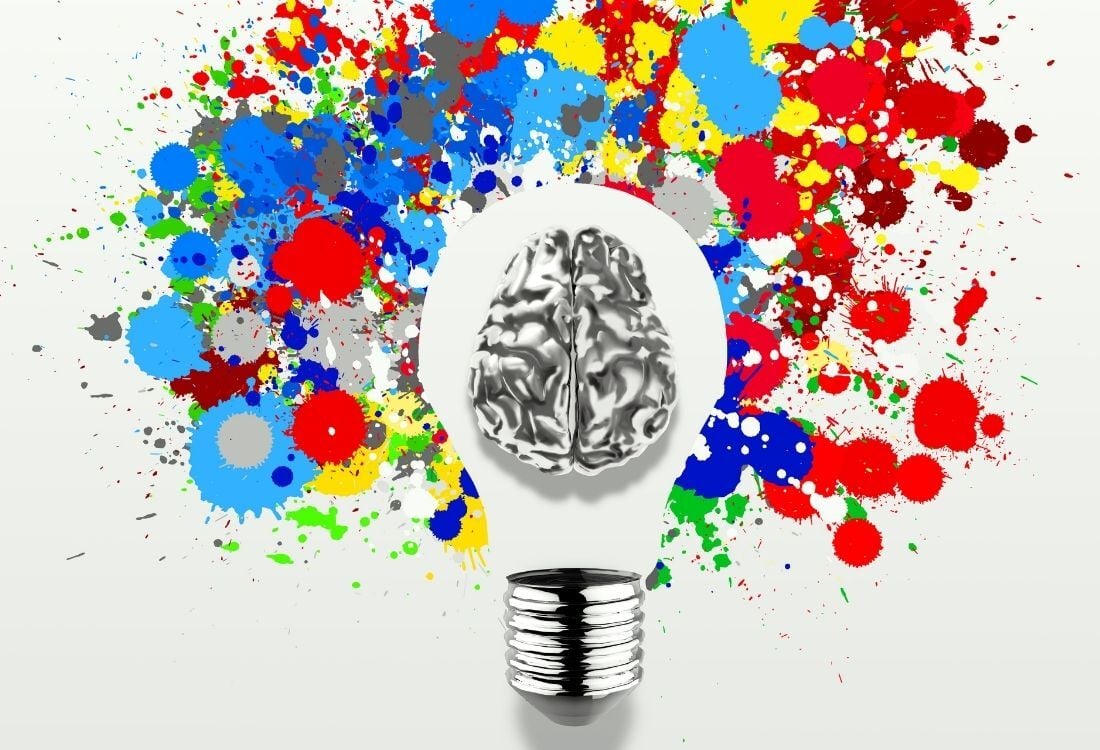
Many renowned artists, both historical and contemporary, have discussed their artwork alongside struggles with bipolar disorder (BD). Well-known historical figures such as Vincent Van Gogh, to current world-famous singers such as Chappel Roan are prime examples of such artists. Naturally, this poses an interesting question of whether there is a link between bipolar disorder and improved creative abilities. Bipolar disorder (BD) is a mood disorder involving episodes of depression and/or mania hypomania (American Psychiatric Association, 2022). More specifically, BD is characterised by marked fluctuations in mood, ranging from episodes of severe depression to episodes of hypomania or mania, which are associated with increased motivation, energy and goal-directed activity. The following blog will investigate various mechanisms linking BD and creativity, primarily through the shared vulnerability model as well as the role of hypomania.
Inverted U-Shaped Relationship
Most common stereotypes depict a very linear relationship between BD and creativity, with increasing levels of bipolar traits linked to higher levels of creativity. However, this may be an oversimplification of the true relationship that exists between these two phenomena. Research has instead suggested an inverted-U relationship linking these two subjects (Greenwood, 2020). More specifically, research has hypothesised that low levels of bipolar traits can greatly contribute to creativity, with moderate levels of bipolar traits enhancing it. However, increasingly severe bipolar symptoms have an opposite effect, leading to impairments in daily functioning and creativity. Moreover, in support of this inverted U-shaped correlation, individuals with milder forms of BDs, experiencing cyclothymia or a milder hypomanic temperament, have frequently shown greater creative abilities/skills compared to both healthy control groups, and severe Bipolar I disorder group (Greenwood, 2020). In summary, moderate expressions of bipolar traits may positively enhance creative abilities, whilst severe BD symptoms reach a dysfunctional level, inhibiting any positive benefits.
Shared Vulnerability Model
A second way to understand the relationship between creativity and BD is through a shared vulnerability model (Carson, 2011). This theory suggests that creativity and BD both emerge from a shared set of underlying vulnerabilities. In this model, instead of BD directly causing improvements in creative abilities, both are theorised to arise from common traits. Therefore, mild expression of these traits facilitate creativity, whereas stronger expression may contribute to BD, with extreme expressions leading to severe psychiatric symptoms. These shared factors include reduced latent inhibition, novelty seeking and neural hyperconnectivity.
Latent inhibition
Latent inhibition is the ability to screen from one’s consciousness stimuli that has previously been deemed as irrelevant (Carson, 2011). This can lead to lower creativity as it reduces the amount of information that is consciously processed. Highly creative individuals, as well as individuals with psychiatric conditions report reduced latent inhibition (Carson, 2011). More specifically, these individuals show a reduction in the amount of information categorised as irrelevant and therefore have access to a larger inventory of unfiltered stimuli which they are consciously aware off (Carson et al., 2003). In turn, this increases the possibility of developing novel ideas through various combinations of stimuli, thus increasing creativity. Interestingly, reduced latent inhibition is also linked to openness to experience, a trait highly correlated with creativity. This shared traits amongst both groups provide supporting evidence for the shared vulnerability model.
Novelty seeking
A second shared trait seen in both groups is a higher level of novelty seeking. This particular trait is very closely linked to creativity, as it provides the intrinsic motivation to interact with novel ideas (Carson, 2011). Internal rewards for seeking out novel stimuli in one’s environment are crucial in fostering intrinsic motivation and creativity. In support of this evidence, creative individuals show a higher tendency to seek out complex and new stimuli, compared to familiar ones (Reuter et al., 2005). Similarly, novelty seeking has also been associated with bipolar states of hypomania and mania, with individuals in these groups scoring significantly higher on measures of novelty seeking (Frye & Salloum, 2006). Thus, whilst novelty seeking may enhance creativity, it may also act as a risk factor for BD (Carson, 2011).
Neural hyperconnectivity
A final factor in the shared vulnerability model is neural hyperconnectivity (Carson, 2011), which refers to abnormal neural connections between brain regions that are not typically functionally linked. One of the most well-studied examples of neural hyperconnectivity is synaesthesia, a phenomenon in which stimulation of one sensory modality automatically evokes experiences in another (Carson, 2011). For example, an individual with synaesthesia may associate the taste of a particular food with a specific colour or perceive a particular number as eliciting a distinct smell, demonstrating cross-modal sensory associations between otherwise unrelated senses. Research has also shown that synaesthesia is associated with higher levels of creativity, particularly among artists (Lunke & Meier, 2018), suggesting that this increased connectivity may facilitate novel associations. Extending this idea, Ramachandran and Hubbard (2001) suggested that neural hyperconnectivity underlies human metaphorical thinking by enabling connections between seemingly unrelated concepts. This style of thinking is characteristic of highly creative individuals but has also been observed in individuals experiencing hypomania or psychosis (Carson, 2011). Supporting this shared vulnerability perspective, recent neuroimaging research has found evidence of neural hyperconnectivity in both highly creative individuals and individuals with mental disorders while they performed creative tasks (Forthmann et al., 2023; Greenwood et al., 2022). This neural hyperconnectivity provides further evidence for the link between BD and creativity.
The Role of Hypomania
The final connection between creativity and BD is the role of hypomania (Greenwood, 2020). Hypomania can be understood as a period during which an individual experiences abnormal and persistently elevated increased energy and/or activity for at least 4 consecutive days (American Psychiatric Association, 2022). It is viewed as less severe than episodes of mania, whilst still displaying similar qualities to lesser degrees. Previous research has provided strong evidence for a link between hypomanic traits and higher scores on measures of creativity (Furnham et al. 2008; Greenwood, 2020; Greenwood, 2011). Examples of hypomanic traits include elevated energy, increased confidence, increased openness, increased motivation and impulsivity (Greenwood, 2020). This has been theorised to increased creativity through promoting exploration of new ideas, increased confidence and motivation to create art, and an increased willingness to take risks (Greenwood et al, 2020). Importantly, researchers have found that whilst hypomania is associated with an increased number of ideas, is it also correlated with lower quality of these creative ideas (Koivisto, 2026). Thus, when considering the role of hypomania in creativity, it is vital that measures of creativity measure both the quantity of the output as well as its quality. On the other hand, unlike hypomania, full mania often results in a significant deterioration of functioning and judgement, resulting in reduced creative output (Greenwood, 2020).
Summary
The research outlined in this blog emphasise the complex relationship between BD and creativity. Common stereotypes that directly link mental illness to enhanced creativity abilities simplify a complicated shared vulnerability between these two variables. Current research suggests that creativity is most strongly associated with milder bipolar traits, particularly hypomania, rather than severe forms of the disorder. Furthermore, the shared vulnerability model provides three potential mechanisms as a foundation for this relationship, notably through latent inhibition, novelty seeking, and neural hyperconnectivity. Combining both the research on the shared vulnerability model, as well as the crucial role of hypomania provides a more accurate assessment of the connection between creativity and BD. Understanding this nuanced relationship is crucial in challenging common stereotypes and highlights the importance of recognising BD as a serious mental health condition rather than simply a source of creative talent.
For individuals living with bipolar disorder, understanding the relationship between mood, brain activity and creativity is important, but creativity should never be viewed as a reason to tolerate the more disruptive effects of the condition. Treatment aims to support greater stability and quality of life while allowing individuals to retain their sense of identity and individuality. At Smart TMS, TMS treatment for bipolar disorder uses targeted magnetic pulses to stimulate the prefrontal cortex, an area of the brain involved in regulating mood, motivation and social functioning. By influencing brain activity and neural pathways, TMS may help support more balanced brain function without the need for anaesthesia or surgery. Ultimately, the aim of treatment is not to change who someone is or diminish their creativity, but to help manage the symptoms of bipolar disorder and support a more stable and fulfilling daily life.
Written by Lavina, Smart TMS Edinburgh Practitioner
References
American Psychiatric Association. (2022). Diagnostic and statistical manual of mental disorders (5th ed., text rev.). https://doi.org/10.1176/appi.books.9780890425787
Carson, S. H. (2011). Creativity and Psychopathology: A Shared Vulnerability Model. The Canadian Journal of Psychiatry, 56(3), 144–153. https://doi.org/10.1177/070674371105600304
Carson, S. H., Peterson, J. B., & Higgins, D. M. (2003). Decreased Latent Inhibition Is Associated With Increased Creative Achievement in High-Functioning Individuals. Journal of Personality and Social Psychology, 85(3), 499–506. https://doi.org/10.1037/0022-3514.85.3.499
Forthmann, B., Kaczykowski, K., Benedek, M., & Holling, H. (2023). The Manic Idea Creator? A Review and Meta-Analysis of the Relationship between Bipolar Disorder and Creative Cognitive Potential. International Journal of Environmental Research and Public Health, 20(13), 6264. https://doi.org/10.3390/ijerph20136264
Frye, M. A., & Salloum, I. M. (2006). Bipolar disorder and comorbid alcoholism: Prevalence rate and treatment considerations. Bipolar Disorders, 8(6), 677–685. https://doi.org/10.1111/j.1399-5618.2006.00370.x
Furnham, A., Batey, M., Anand, K., & Manfield, J. (2008). Personality, hypomania, intelligence and creativity. Personality and Individual Differences, 44(5), 1060–1069. https://doi.org/10.1016/j.paid.2007.10.035
Greenwood, T. A. (2020). Creativity and Bipolar Disorder: A Shared Genetic Vulnerability. Annual Review of Clinical Psychology, 16(Volume 16, 2020), 239–264. https://doi.org/10.1146/annurev-clinpsy-050718-095449
Greenwood, T. A., Chow, L. J., Gur, R. C., & Kelsoe, J. R. (2022). Bipolar spectrum traits and the space between Madness and Genius: The Muse is in the Dose. Journal of Psychiatric Research, 153, 149–158. https://doi.org/10.1016/j.jpsychires.2022.07.009
Lunke, K., & Meier, B. (2019). Creativity and involvement in art in different types of synaesthesia. British Journal of Psychology, 110(4), 727–744. https://doi.org/10.1111/bjop.12363
Ramachandran, V. S., & Hubbard, E. M. (2001). Synaesthesia—A Window Into Perception, Thought and Language.
Reuter, M., Panksepp, J., Schnabel, N., Kellerhoff, N., Kempel, P., & Hennig, J. (2005). Personality and biological markers of creativity. European Journal of Personality, 19(2), 83–95. https://doi.org/10.1002/per.534