





TMS Therapy: A New Hope for Alzheimer's and Cognitive Decline
July 31, 2026 - Smart TMS


What Is Alzheimer’s Disease and What Causes It?
Alzheimer’s disease (AD) is a progressive neurodegenerative condition characterised by memory loss, difficulties with language and problem-solving, changes in mood and behaviour, and a gradual decline in independence (1). It is the most common form of dementia, affecting millions of people globally (2). Of the 55 million people living with dementia, approximately 60–70% have Alzheimer's (3).
The condition is linked to the accumulation of abnormal proteins in the brain, amyloid plaques and neurofibrillary tangles, which disrupt neuronal communication, lead to brain cell death and cause the brain to shrink over time (4). As research into brain health continues to develop, treatments such as Transcranial Magnetic Stimulation (TMS) therapy are being explored as a potential approach to support cognitive function and brain activity in people living with Alzheimer’s disease and cognitive impairment.
Alzheimer’s Treatments: What Are the Options?
There is currently no cure for Alzheimer's disease, and existing treatments focus on managing symptoms, maintaining independence, improving quality of life and slowing disease progression. Medications including Cholinesterase Inhibitors help maintain cognitive function (14).
Non-pharmacological approaches, including cognitive stimulation, reminiscence therapy, occupational therapy, physical activity, and psychosocial support play a vital role in managing symptoms, reducing behavioural challenges, and supporting patient and caregiver wellbeing (15).
In recent years, TMS treatment for Alzheimer’s disease and cognitive impairment has gained increasing research interest. TMS is a form of non-invasive brain stimulation that has already been established as an effective treatment option for several mental health conditions, including treatment-resistant depression, and researchers are now investigating its potential role in supporting memory, cognition and brain function.
How Can TMS Help People With Alzheimer’s Disease?
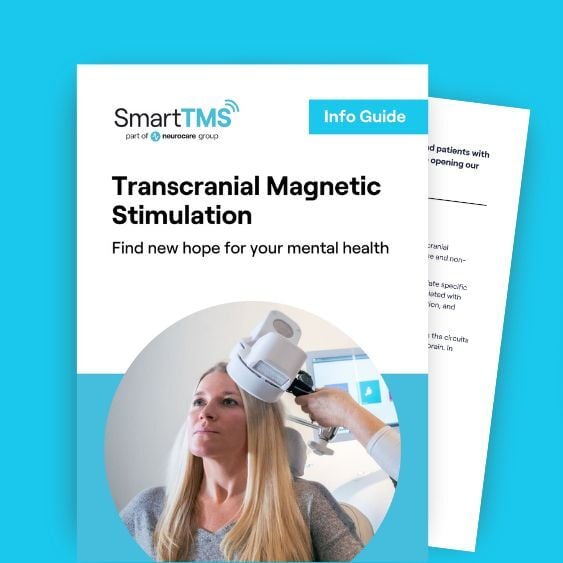
Transcranial Magnetic Stimulation (TMS) is a non-invasive brain stimulation technique that uses magnetic pulses to target specific areas of the brain, stimulating or inhibiting activity.
TMS is an established treatment for certain mental health conditions and has been approved by NICE for treatment-resistant depression (16). Research into TMS for depression has demonstrated its ability to influence brain networks involved in mood regulation, and researchers are now exploring whether similar mechanisms may support cognitive function in neurological conditions such as Alzheimer’s disease.
Studies investigating TMS for Alzheimer’s disease suggest that repetitive TMS (rTMS) may help stimulate underactive brain regions affected by cognitive decline, potentially improving memory, attention and executive function in people with mild-to-moderate Alzheimer’s disease and mild cognitive impairment (MCI).
Although early research is promising, TMS for Alzheimer’s is still an emerging area of treatment. Further research is needed to understand long-term outcomes and determine the most effective treatment protocols.
Can TMS Improve Memory and Cognition in Alzheimer’s? What Does the Research Say?
Boosting brain activity:
TMS can stimulate underactive brain regions including the DLPFC, which is involved in executive function, attention and working memory. A systematic review found repetitive transcranial magnetic stimulation (rTMS) significantly improved memory, attention and language functions in individuals with mild-to-moderate AD, particularly when multiple brain sites were stimulated (17).
These findings suggest that rTMS treatment for cognitive impairment may have potential benefits for supporting brain networks involved in memory and information processing.
Enhancing neuroplasticity:
TMS may enhance neuroplasticity, the ability of neural networks in the brain to change through growth and reorganisation (18). Research has shown rTMS can increase Brain-Derived Neurotrophic Factor (BDNF), a protein essential for neuronal survival, synaptic plasticity and learning (19).
High-frequency TMS has also been shown to enhance connectivity within and between brain regions, including the hippocampus and prefrontal cortex, and improve scores on cognitive tests (20;21).
Complementary to other therapies:
When combined with cognitive training such as memory or language tasks, TMS has been found to boost cognitive function in people with Alzheimer’s disease and produce greater and longer-lasting cognitive improvements than either intervention alone.
This combined approach has been associated with improvements in memory, language and attention that may continue for months after therapy ends (22,23). These findings highlight the potential of TMS therapy for cognitive impairment as part of a wider approach to supporting brain health.
Who Is a Good Candidate for TMS?
TMS may be considered for individuals with:
- Mild-to-moderate Alzheimer’s disease
- Early signs of cognitive decline, including mild cognitive impairment (MCI)
- Difficulty tolerating medication
- Interest in non-drug treatment options
- Low mood associated with memory loss or cognitive changes
Because TMS is already used for conditions such as depression, anxiety disorders and other mental health conditions, researchers are continuing to explore how brain stimulation techniques may support a wider range of neurological and psychiatric conditions.
Final Thoughts
While TMS is not a cure for Alzheimer’s disease, research suggests it may offer a promising new approach for supporting cognition, memory and brain function. By promoting neuroplasticity and strengthening communication between brain networks, TMS therapy for Alzheimer’s and cognitive impairment may provide a non-invasive, drug-free option that complements existing treatments.
Ongoing research continues to explore the role of TMS for Alzheimer’s, mild cognitive impairment and other cognitive disorders, with the aim of better understanding how brain stimulation can support people experiencing cognitive decline.
About Smart TMS
At Smart TMS, we provide evidence-based Transcranial Magnetic Stimulation (TMS) treatment for a range of mental health and neurological conditions. Our clinicians follow the latest research into how TMS may support brain function, including emerging evidence showing that TMS may help slow cognitive decline in people with mild-to-moderate Alzheimer’s disease and improve memory function in people with mild cognitive impairment (MCI).
We offer TMS treatment for individuals with mild-to-moderate Alzheimer’s disease and MCI, using personalised treatment approaches designed around each person’s needs. If you would like to find out more about TMS for Alzheimer’s disease, TMS for cognitive impairment, or how TMS therapy may help you or a loved one, contact Smart TMS today to speak with our team and learn more about available treatment options.
References
- BMJ Best Practice. (2025). Alzheimer’s disease: Symptoms, diagnosis and treatment. BMJ. Retrieved July 11, 2025, from https://bestpractice.bmj.com/topics/en-gb/317
- Mayo Clinic. (2024, February 3). Alzheimer’s disease. https://www.mayoclinic.org/diseases-conditions/alzheimers-disease/symptoms-causes/syc-20350447
- Bloom G. S. (2014). Amyloid-β and tau: the trigger and bullet in Alzheimer disease pathogenesis. JAMA neurology, 71(4), 505–508. https://doi.org/10.1001/jamaneurol.2013.5847
- National Institute on Aging. (2024). What causes Alzheimer’s disease? National Institute on Aging. https://www.nia.nih.gov/health/alzheimers-causes-and-risk-factors/what-causes-alzheimers-disease
- Alzheimer’s Society. (2024, July 22). Record number of people are receiving a dementia diagnosis in England. Alzheimer’s Society. https://www.alzheimers.org.uk/news/2024-11-19/record-number-people-are-receiving-dementia-diagnosis-england
- Silva, M. V. F., Loures, C. D. M. G., Alves, L. C. V., De Souza, L. C., Borges, K. B. G., & Carvalho, M. D. G. (2019). Alzheimer’s disease: risk factors and potentially protective measures. Journal of biomedical science, 26, 1-11.
- Niu, H., Álvarez-Álvarez, I., Guillén-Grima, F., & Aguinaga-Ontoso, I. (2017). Prevalence and incidence of Alzheimer's disease in Europe: A meta-analysis. Neurología (English Edition), 32(8), 523-532.
- Stern, Y. (2021). How can cognitive reserve promote cognitive and neurobehavioral health? Archives of Clinical Neuropsychology, 36(7), 1291-1295.